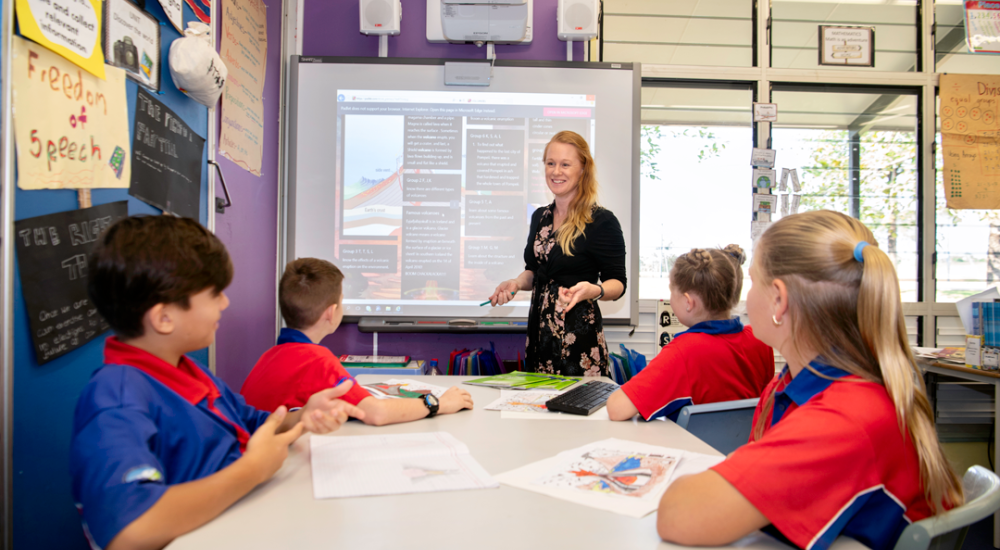
Teachers in the Northern Territory (NT) teach approximately 34,000 children in 153 government schools spread across 1.35 million square kilometres. 71 per cent of schools are located in remote and very remote areas, with 44 per cent of the NT’s total student population attending those remote schools. Some 44 per cent of students in the NT speak a language other than English at home.
Did you know that when you teach in a remote school in the Northern Territory there are additional incentives and benefits. Use our interactive incentive and benefits calculator to calculate how much you may be entitled to, based on your personal circumstances and location.
For information on every school in the NT, see the Education Directory.
School Classification information
A list of all urban and remote schools in the Territory can be found on the Northern Territory Government website here.
- What is a remote school in the NT
-
A remote location is defined as a town, place, community or locality, outside the environs of Darwin, Katherine and Alice Springs, where access to health, education, social, financial, emergency, communication and professional support services are limited. The correlation of these factors, including the costs of goods and services, shall be considered when determining categories of remoteness.
For information regarding what entitlements are available for teachers working in remote school's view Determination number 8 of 2015 Remote locality provisions.
- What is an urban school in the NT
-
In the Northern Territory (NT), urban schools are generally defined as those located in the larger urban centres, particularly Darwin, Katherine, and Alice Springs. These schools are characterized by their proximity to various services and amenities, compared to schools in remote or rural areas.
They are distinguished from schools in remote or rural areas, which often have limited access to resources and services.